AI visibility audit vs. tracking tool: which do you need?
 By Daniela Ricaud, founder of Pretty Citable
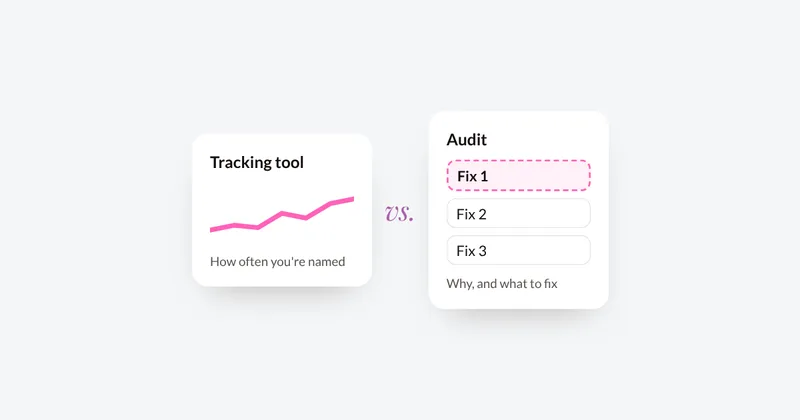
A tracking tool runs a set of prompts on AI engines on a schedule and shows how often your brand is mentioned over time. An audit shows what AI tells shoppers about you today, who gets named in your place, which sources the engines trust, and what to fix first. Most ecommerce brands need the audit first, to learn which questions matter and what to change, and tracking after that, to watch the fixes work.
What an AI visibility tracking tool does
A tracking tool takes a list of prompts you choose, runs them on a set of AI engines on a schedule, and reports how often your brand and your competitors come up. You get dashboards and trends. Pricing is usually by the number of prompts you track. Two published examples:
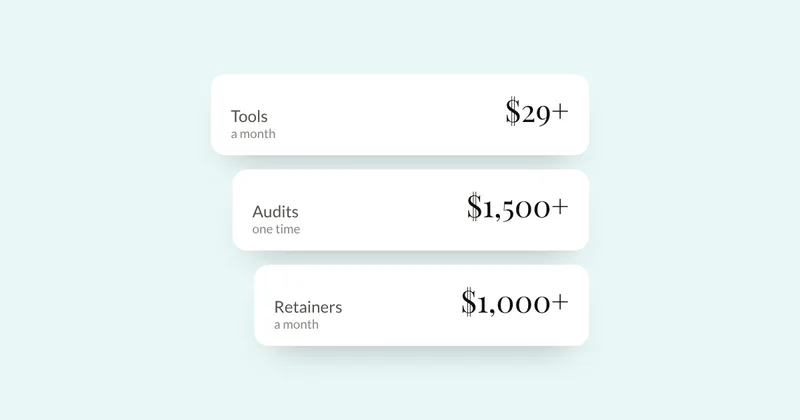
- Otterly.AI: $29 a month for 15 prompts, $189 for 100, $489 for 400.
- Semrush AI Visibility Toolkit: $99 a month per domain.
Tools are good at frequency: they check more often than any person can, and they show movement over weeks. The tool leaves two jobs to you. You choose the prompts, and you decide what to change when the numbers move.
What an AI visibility audit does
An audit is a one-time, in-depth look at where you stand right now. A good one tests your buyers' real questions on every major engine, saves each answer as a dated screenshot, names the competitors recommended in your place, shows which sources the engines cite for them, and ends with a ranked list of fixes. Published agency audits typically cost $1,500 to $8,000. Here's the full price breakdown.
Side by side
| Tracking tool | Audit | |
|---|---|---|
| Main question it answers | How often are we mentioned, and is it changing? | What does AI say about us today, why, and what do we fix first? |
| Who chooses the prompts | You | The auditor, built from your products and buyers |
| What you get | Dashboards and trends | Screenshots, a competitor map, sources and ranked fixes |
| Who acts on it | Your team | Your team or the auditor, depending on the package |
| How you pay | Monthly subscription | One-time fee |
Which one do you need?
- Start with an audit if you don't yet know which questions your buyers ask AI, who gets named in your place, or what to change. A tracker pointed at the wrong prompts measures the wrong thing every month.
- Start with a tool if you already know your key prompts, your team can make the changes, and you mainly want to watch the trend.
- Use both if you're investing in fixes. The audit picks the prompts and the work, and tracking shows whether the work moved anything.
Check this before you trust any number
AI answers change from day to day, so a single check tells you little and a trend tells you more. Whatever you use, make sure you can see the actual answers behind the numbers, and that the prompts are questions your buyers really ask. Here's how to test by hand.
How Pretty Citable fits
The AI Visibility Audit is $500: 30 of your buyers' questions on ChatGPT, Google AI, Perplexity and Claude, dated screenshots, the competitors named in your place and at least five ranked fixes, in 5 business days. After the fixes, Monthly Visibility Support re-tests your questions every month, from $1,000 a month. If you'd rather track with a tool, the audit gives you the prompt list to load into it.
Sources
- Otterly.AI: pricing
- Semrush: AI visibility tracking tools for agencies, Jul 31, 2026
- Ahrefs: How stable are AI citations? 37,500 citations tracked for 20 days
See where your brand stands
Run three buyer questions yourself in 60 seconds, or get the full AI Visibility Audit: 30 questions on four engines, a competitor map and a ranked fix list in 5 business days.